Next-Gen HMI: Hi-Fidelity Automotive Interface Concept
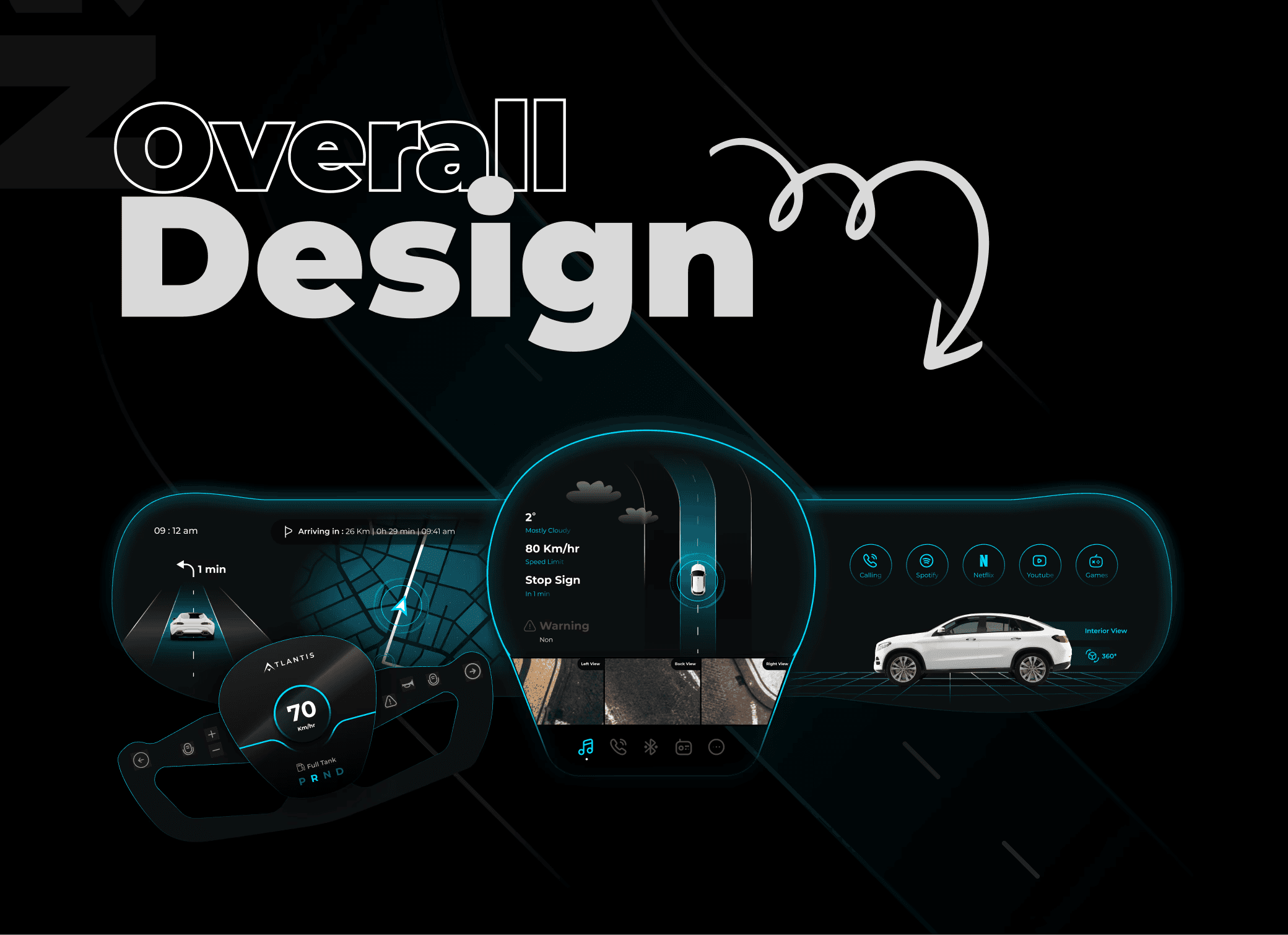
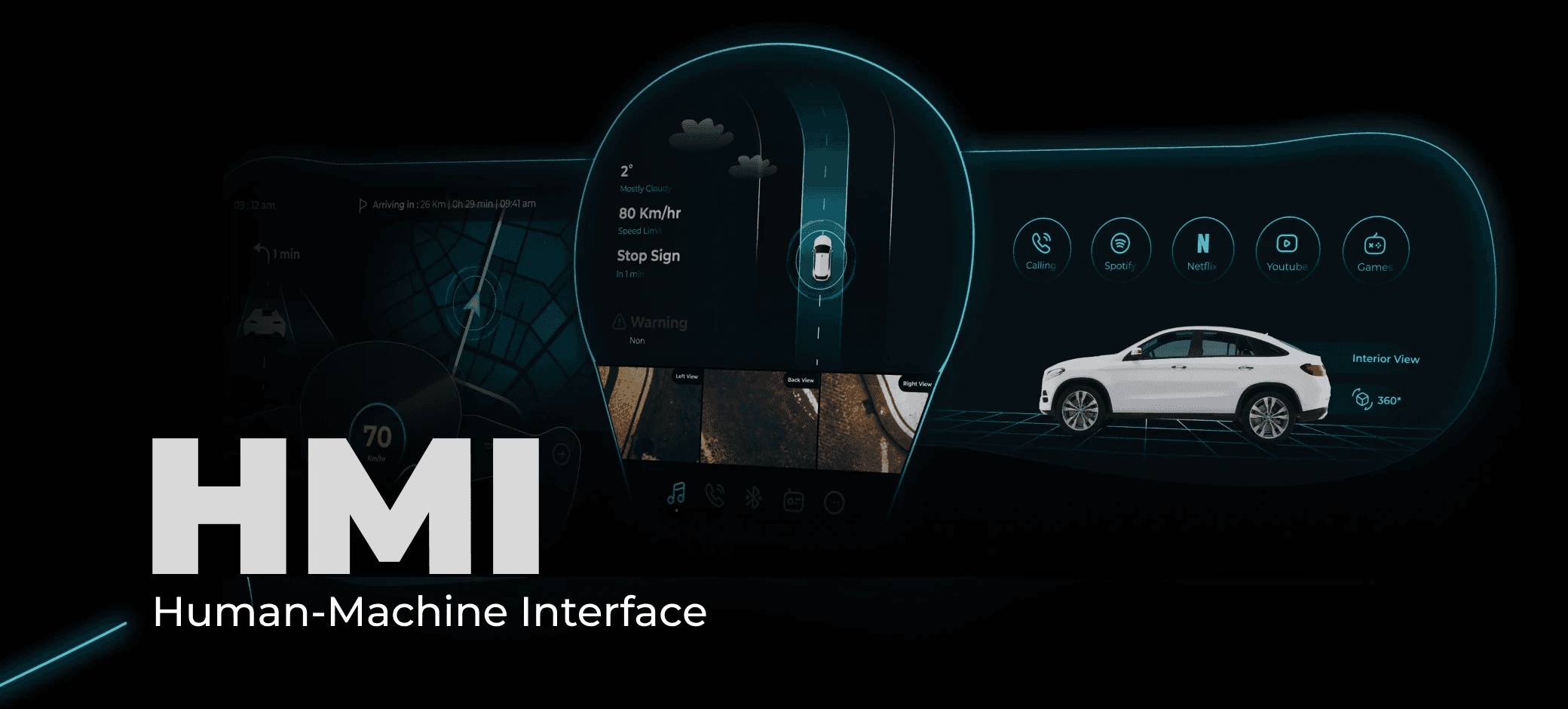
This project is a high-fidelity concept for a next-generation in-car Human–Machine Interface (HMI). It explores how drivers and passengers could interact with a modern vehicle through a clean, cinematic, and highly functional digital dashboard and infotainment system. The goal is to combine futuristic visuals with practical layouts so that important information is always clear and easy to read while driving.
Client
Self-Initiated Concept
Industry
Automotive, HMI and Future Mobility
Service
Interaction Design
|
Accessibility
Date
Dec 10, 2025
Location
India
Live Website
About the Project
This is a self-initiated concept project created to imagine how future car interfaces could feel inside electric and smart vehicles. Instead of designing for a specific brand, the focus is on designing a system that feels premium, intelligent, and safe across different driving contexts such as city driving, highway cruising, and nighttime rides.
The interface brings together navigation, media, vehicle status, climate controls, and driving assistance information into one consistent design language. Large typography, clear icons, and strong visual hierarchy make sure that the driver can quickly scan the screen and understand what is happening without distraction. The overall experience is meant to feel like a mix of a digital cockpit and a high-end media center, all inside the car.
The Challenge
Today, many in car interfaces feel cluttered, confusing, or visually noisy. Drivers often have to look at the screen for too long to find basic actions like changing music, checking range, or adjusting the temperature. This can be distracting and unsafe, especially at high speeds or in complex traffic.
The challenge for this project was to design a next-generation HMI that looks futuristic and visually rich, but still remains simple to use in real driving conditions. The interface had to handle multiple types of information maps, speed, media, calls, vehicle data without overwhelming the driver. The key question was: how can the system look cinematic and advanced, while still being calm, readable, and predictable at a glance?
The Strategy
The design strategy started with organising information into clear layers. Critical driving data such as speed, route guidance, and alerts are always given top priority in terms of placement, size, and contrast. Secondary actions like browsing playlists or adjusting climate are visually toned down and positioned so they do not compete with primary driving information.
Visual design uses a dark, premium look with glowing highlights, soft gradients, and subtle 3D depth to create a futuristic cockpit feel. At the same time, strong contrast and large, legible typefaces support readability in both day and night modes. Motion and micro-interactions are treated as a way to guide attention and indicate state changes, not just to add decoration. Transitions between screens—like switching from navigation focus to media focus are designed to feel smooth and predictable so that the driver always knows where to look next.
Key features and flows
A main dashboard that combines speed, driving mode, directions, and quick controls in a single, balanced layout.
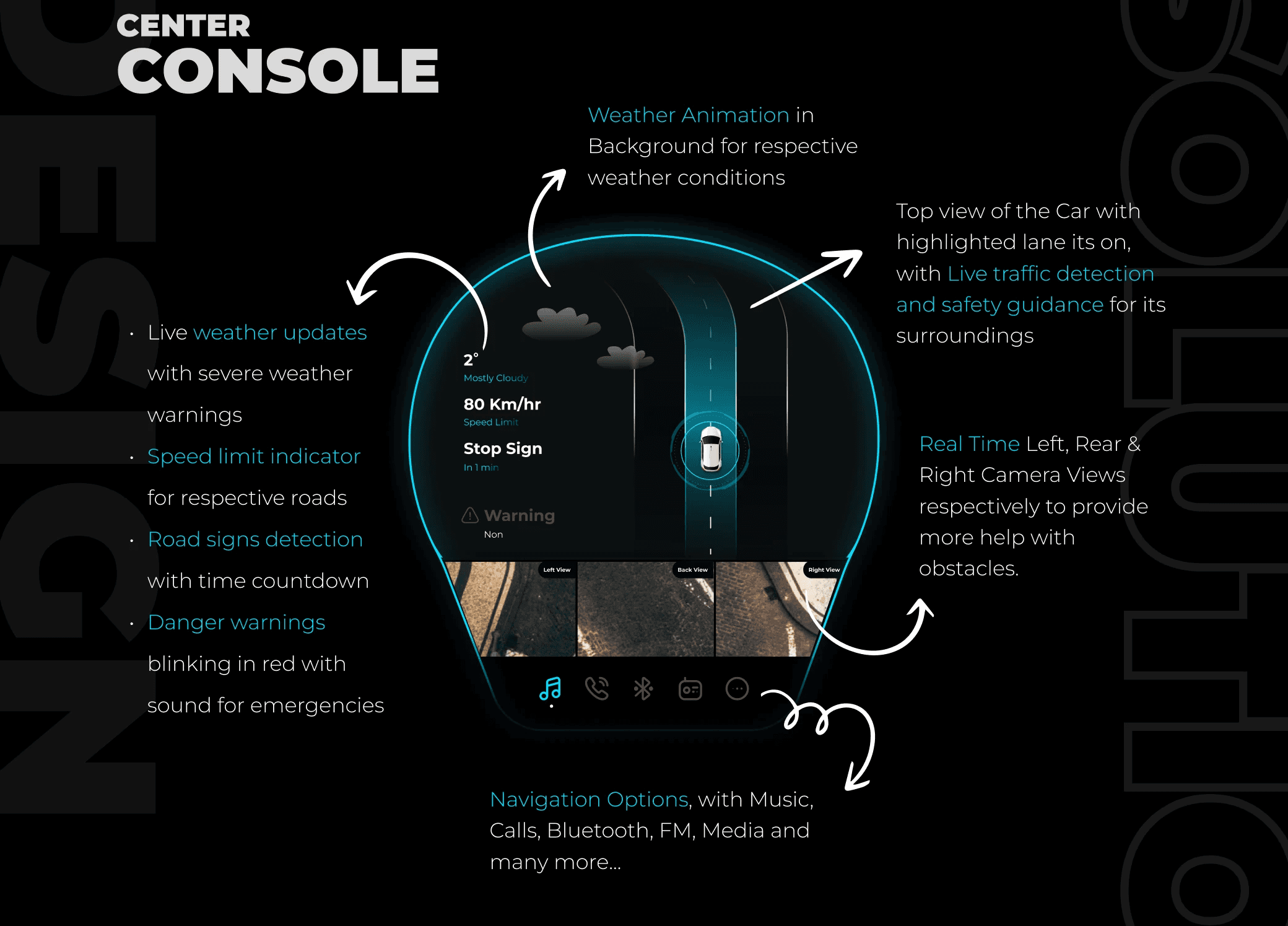
A navigation view that highlights the route and next maneuver clearly while still keeping essential vehicle information visible.
Media and entertainment screens that bring album art, track details, and controls together in a way that feels immersive but not distracting.
Vehicle status panels for range, battery or fuel, tire pressure, and warnings, designed in a modular way so they can be reused or rearranged across different car models.
Contextual states such as night driving or sport mode, where the color, lighting, and accent elements adapt to match the driving scenario.
All these flows follow the same visual system, so once a user understands how to read one screen, the rest of the interface feels familiar and intuitive.
The Results
The final outcome is a cohesive, high-fidelity HMI concept that demonstrates how a car’s digital interface can feel both cinematic and safe. The design shows that a future automotive interface can support rich 3D visuals, glowing accents, and dynamic layouts without losing clarity.
This project can sit inside the portfolio as a strong example of advanced UI/UX and interaction design for the automotive and mobility space. It showcases skills in information architecture, visual design, motion thinking, and system-level design for complex, real-time environments like a vehicle cockpit. It also opens the door for further explorations into personalization, voice integration, heads-up display extensions, and multi-screen ecosystems within the car.