Turning ChatGPT into Productivity
Organize • Share • Collaborate • Create - A UI/UX case study on transforming ChatGPT into a productivity tool
Client
Evening Designers
Industry
Design
Service
User Research
|
Design Systems
Date
Oct 8, 2025
Location
India
Live Website
About the Client
Evening Designers is a collaborative design cohort (ED-5) focused on creating innovative UI/UX solutions for productivity and communication tools. The team specializes in design thinking, user research, and creating scalable digital experiences.
Their goal: Transform ChatGPT into a comprehensive productivity platform by designing features for organizing, sharing, collaborating, and creating content—enabling seamless team collaboration and document management.
The Challenge
ChatGPT users face significant challenges in maintaining productivity across team environments. The key problems identified through user research include:
• Limited collaboration: ChatGPT lacks real-time collaboration features, making it difficult for teams to work together on shared conversations
• No conversation organization: Users cannot organize conversations into folders or projects, leading to clutter and lost important discussions
• Ineffective prompt management: There is no way to save, organize, or reuse frequently used prompts across different contexts
• Lack of knowledge persistence: Users struggle to maintain long-term knowledge systems and cannot easily archive important responses
• No team workspace features: No dedicated spaces for teams to collaborate, share resources, or maintain shared libraries
• Communication gaps: Absence of features to directly share files, chats, or collaborative workspaces with team members
The Strategy
To enhance ChatGPT's utility for professionals, students, and teams, our design strategy focused on introducing five core features that address the identified pain points through user-centered design.
Organized Workspaces: Create dedicated workspace environments that allow users to organize conversations, projects, and resources in a hierarchical structure with folders and tags for easy navigation.
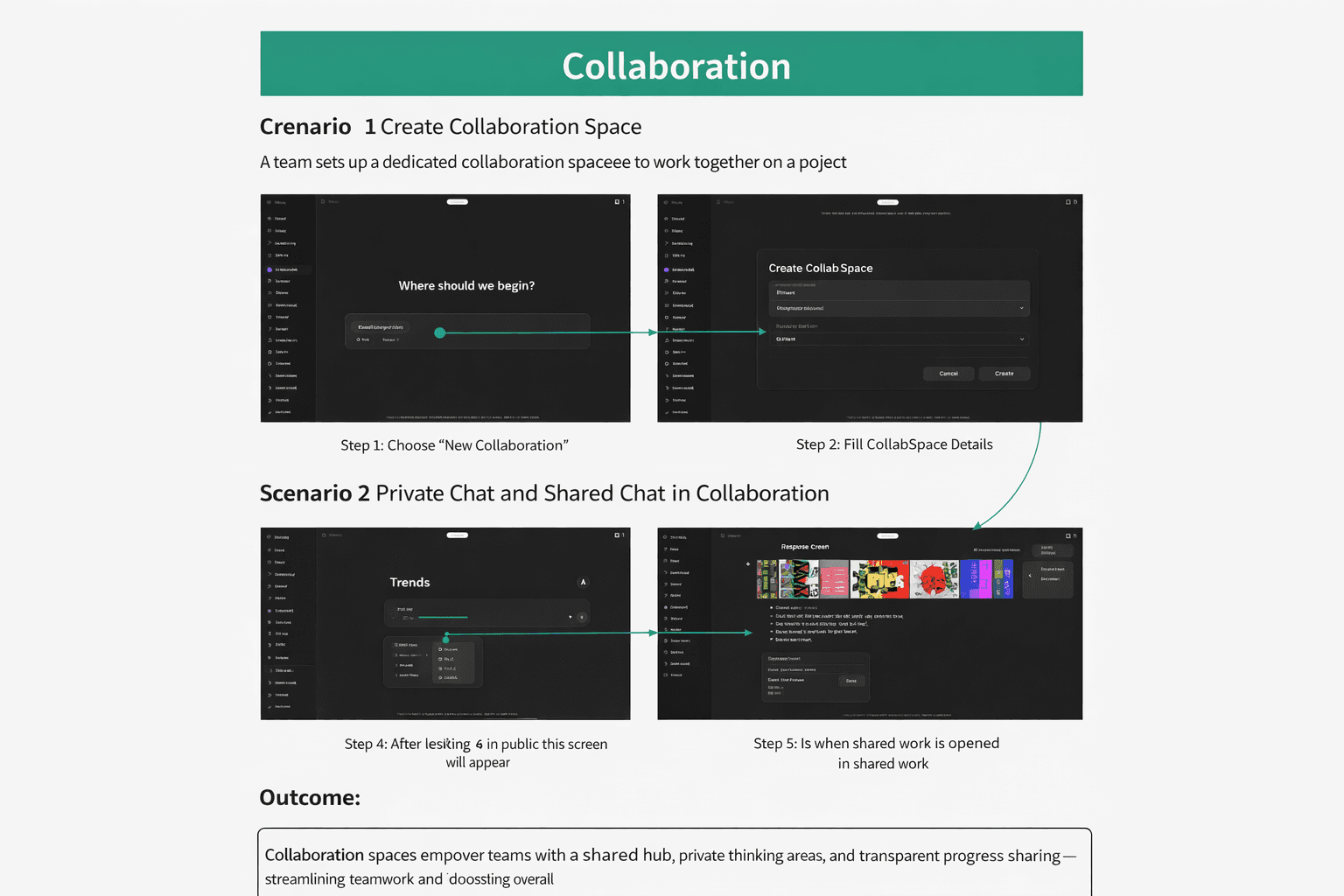
Real-Time Collaboration: Implement shared workspaces where team members can collaborate on the same conversations, see live updates, and contribute to ongoing discussions simultaneously.
Prompt Library & Smart Suggestions: Build a personal and shared prompt library with tagging, search, and smart recommendations to help users quickly access and reuse effective prompts.
Content Organization & Archive: Enable users to save important responses, create folders for different topics, and archive knowledge for long-term reference and team learning.
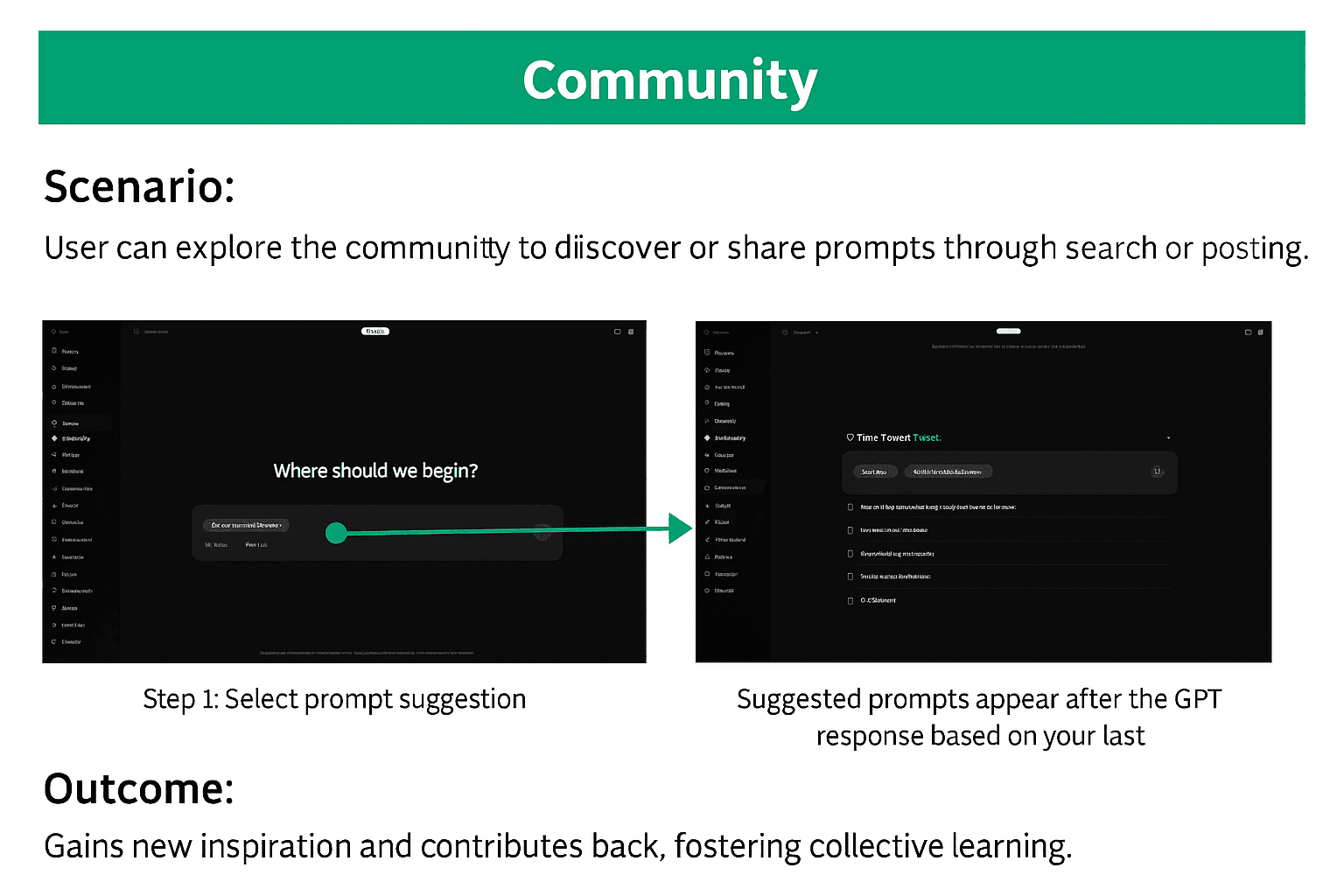
Community & Sharing: Create a community section where users can share useful prompts, discuss solutions, and collaborate on common problems with privacy controls and moderation.
The Results
The design successfully delivered a comprehensive productivity enhancement for ChatGPT, resulting in an innovative platform that serves students, professionals, and teams. Here are the key outcomes:
• 40+ Screens Designed: Created a complete user interface with 40 unique screen designs across all five feature areas
• Seamless Integration: Designed workflows that naturally integrate with ChatGPT's existing interface without disrupting the core experience
• Improved User Experience: Demonstrated 9-11 weeks of iterative design, refinement, and user testing
• Collaboration Features: Implemented real-time shared workspaces allowing simultaneous team collaboration
• Knowledge Management: Enabled users to organize, archive, and retrieve important information efficiently
• Community Building: Created a vibrant community section for users to share knowledge and solutions
136% more leads: A steady flow of quote requests for kitchens, bathrooms, and full-home renovations.
47% lower cost per lead: Better targeting and optimized landing pages significantly reduced wasted ad spend.
+210% increase in organic traffic: Improved rankings in the local pack and organic search for core renovation terms.
Higher-value project inquiries: More homeowners with larger renovation budgets began reaching out — increasing overall revenue.